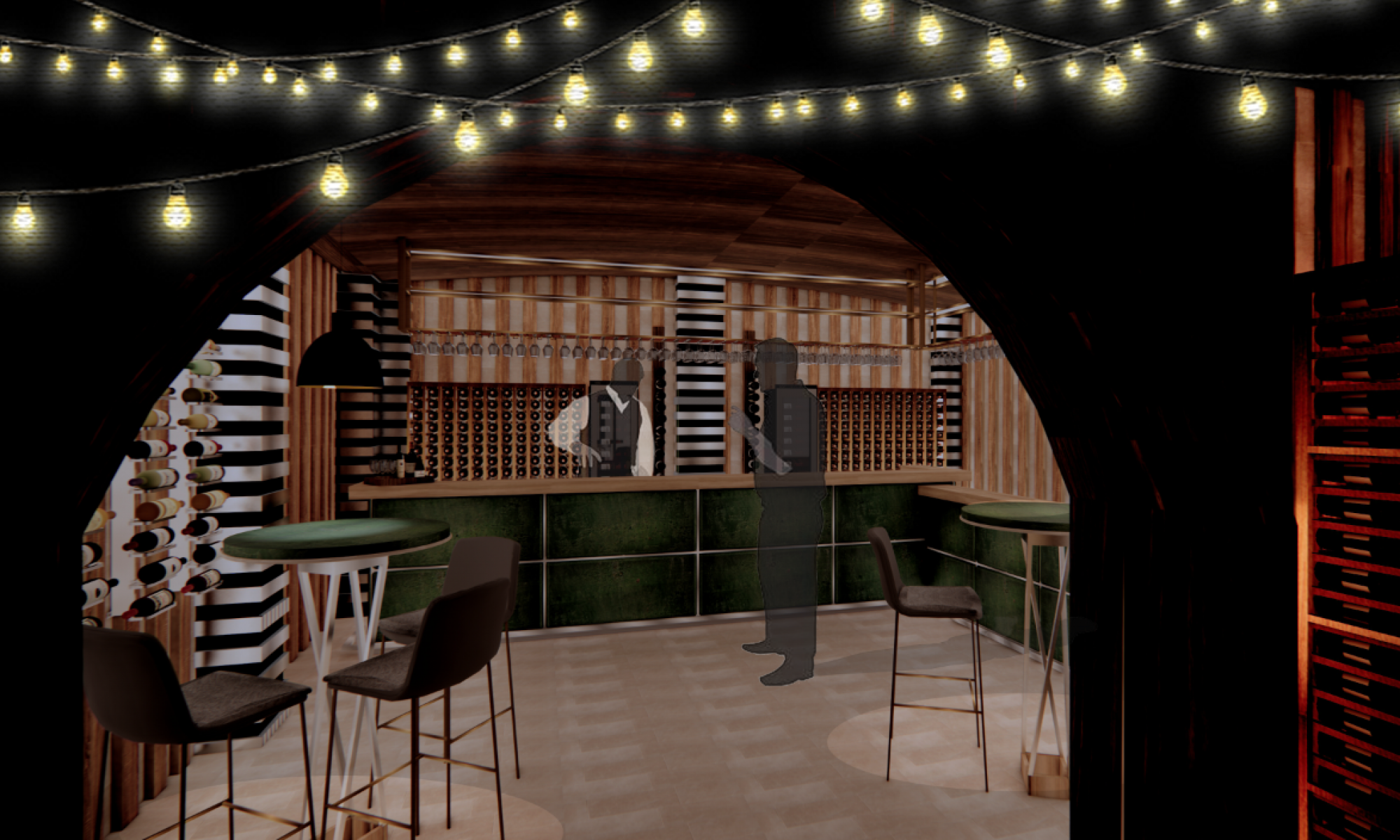
The communication stage of the design process is very important as it allows you to visualise your designs in a 3D setting. Sketchup and photoshop are the main ways to create life-like visuals to portray your design. At the start of my SketchUp development, I struggled to create the staircase which leads from the ground floor to the mezzanine floor. I have always struggled with the production of stairs in my projects however, after using YouTube I was able to develop new techniques which helped me when creating them in SketchUp. After speaking to Craig, he suggested that I should just focus on the ground floor and mezzanine for final submission and create 2 or 3 high-quality visuals which perfectly portray the function of the space and aesthetic. Alongside this, he told me to make the pods more defined to allow them to stand out from the space which is what I have been working on over the past couple of days. Due to the large amount of vegetation I have within my SketchUp model, I decided to experiment with post-digital rendering techniques which mike had recommended to me. I researched into the technique and I instantly fell in love with the artistic visuals that can be produced from the rendering. This technique uses photoshop to overlay shadows, lighting and vegetation to make the visual look realistic but also like an illustration. Experimenting with this rendering technique has allowed me to learn more about the photoshop software and how to change the brightness, contrast, lighting and saturation of images. I have become more confident using this software and I believe that my visuals have developed massively since the start of the year which I am incredibly happy about.
I believe that experimenting with this technique has helped me develop as an interior designer as it allows me to have a variety of different techniques to use when creating visuals for future clients and therefore, I can adapt the software I use depending on their needs and requirements.
During the communication process, I had a one to one lecture with Craig on Micro tectonics. This as incredibly interesting and allowed me to understand how designs can be improved by additional detailing. As an a-level product designer, I understand how components of objects are assembled and dissembled which allows me to understand the importance of micro detailing. After speaking to Craig, he suggested that adding additional detailing to the screens/bi-folding doors will help improve the aesthetic of the visual as well as the accuracy. As you can see from the images below I have adapted the screens to become more realistic which improves the quality of the visual.


 Charlotte's blog