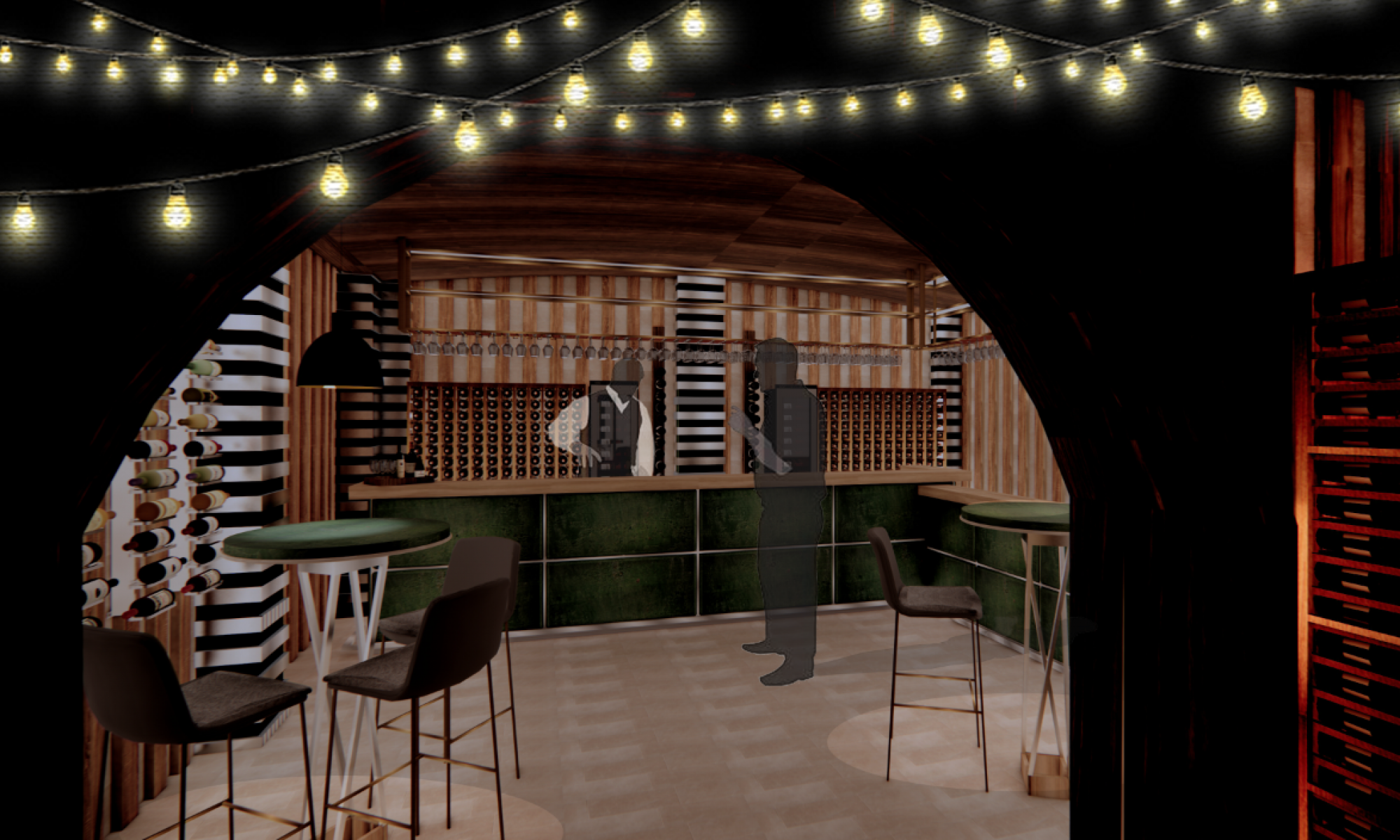
Perspective Drawings:


Perspective 2.png


Perspective Drawings – ‘a place to exist’


‘A place to exist’ has enabled me to continue to develop my technical drawing skills, at the start of this project I was slightly hesitant when drawing the one point perspectives for each room however once I got started my confidence came back. Sketching has always been something which I have loved doing however when it came to one point perspectives I found it hard to remember that every detail needs to be drawn to a specific scale e.g. 1:100. I have always found scales hard to understand however after watching a variety of different technical drawing videos I have developed my knowledge and understanding with perspective drawing and scales which has helped me to draw a variety of perspectives of my building to the scale of 1:100. I am still learning how to produce high-quality perspective drawings, and know that it will take practice to truly gain a large amount of confidence with them however I think my progress this term has been very good. I think for future projects I need to make sure that I add colour to my perspective drawings to give them some life and allow others to gain a real sense of the space I am trying to create. I attempted to apply a light blue to some of the perspectives to act as windows and glass however I believe that more colour is required to make it stand out. This is something which I need to try when I start my new project in the second year. Perspective drawings have allowed me to really gain a sense of the space I am trying to create and therefore help me to gain a better understanding of the space I have available and where I can place certain objects within the space. They have also enabled me to enhance my spacial awareness within space.

Perspective 1

Perspective 3 .png

Clerkenwell Design Week


Clerkenwell Design Week:


Within the final weeks of our project we visited Clerkenwell design week in London, this was incredibly fascinating to visit as I was able to see a variety of newly developed designs as well as attending talks on a variety of different topics centered on design. Visiting the Orange box within Clerkenwell enabled me to see that there are a variety of different spaces in which provide friendly, sociable and private workspaces which can be rented out to designers if they require a new and contemporary work setting. The funky, stylish and unique layout within the orange box inspired me a lot as it showed me that work can be a place which is fun to be in. They provided a variety of different workspaces which had specific ergonomics to suit any designer for example if a designer wanted to work within a space which was comfortable then they could sit in a pod which had soft furnishings and plug sockets to make their day more manageable. They also provided individual spaces which were soundproof, this is ideal for meetings or discussions when privacy is required. Alongside this the area was full of bright, attractive colours which are seen to help individuals become happier during their working day, therefore making work enjoyable.

Design 1.png


Design 2.png


During the day I visited the Furniture Company Moroso, I was particularly interested in their contemporary furniture as they were full of life and colour but also would fit perfectly into a minimalistic interior. I also liked the layout of their exhibition spaces for their furniture, they showed the furniture in its ideal environment; these were particularly stylish. I am very happy that we had this amazing opportunity to visit different exhibitions as it has provided me with inspiration into further designs and has also allowed me to increase my knowledge into a variety of different brands and companies which I could potentially collaborate with in the future.

In addition, I also attended a talk on ‘future space and the way we work’. I found this particularly interesting as it is something which I feel very passionate about, I have always found that working in a dull, boring environment such as a classroom has lowered my motivation. Therefore ensuring that workspaces are fun and enjoyable to be in is incredibly important. Within this talk members of different design, companies were discussing their thoughts on adapting our design workspaces to create something which is better than your home. Thereby suggesting that it will allow designers to leave work feeling refreshed as they have been able to complete their work in a different and unique setting. Alongside this, the talk also discussed how much time has changed with the ability for designers to complete their work from different areas due to the exponential growth in digital technology. This means that designers can download software such as sketch up, Revit and CAD and complete their work from the comfort of their own home, a coffee shop or on the train. These advances in technology have allowed designers to become more independent. Once I graduate I will definitely look for workspaces which will allow me to enhance my motivation and ensure that I have an enjoyable work environment.

Talk.png

Model Making – ‘a place to exist’


Model Making – Project 3


Model making is something which I have always had a passion for, my making techniques from A-level product design have really helped me to produce high quality and stable structured models. Initially, I used cardboard to roughly create the structure of the host building, this allowed me to gain a better understanding of the space available as well as opportunities and restrictions. The basic model helped me to see that there was very little space within the host building and therefore If I decided to divide the space into different walled off sections then I would be considerably reducing the space within the building. Therefore, I decided that because of this I would ensure that the individual spaces within the building were left open to make the accessibility to and from different rooms become easier as you increase fluidity. Once I had finalized my floor plan I went on to produce a model which was made out of a thinner card, this enabled the structure of the model to become more intricate and easier to work with. Once I had created the main features of the building I went on to producing pieces of furniture and accessories which would provide people with a better idea of the layout and the style of the building. This required large amounts of precision and delicacy however due to my love of model making I really enjoyed working on this particular part of the project. I think that producing a model should not only show the main structure of the building but should also provide additional detail. I then went on to produce the workshop and display structure which will be situated on the roof of the host building. I did find this part hard as the stairs were very fiddly to make and kept on breaking, this meant that I had to produce these multiple times; which was frustrating. However, after one last attempt, I was able to do it by using a stronger glue as well as ensuring that it was lent on a box whilst I was completing it. This made it easier for me to add each step individually with both hands rather than whilst holding the steps at the same time.

Model making 2 .png
Model making .png

‘a place to exist’ – Sketchup + V-ray Development


Sketchup and V-ray development (project 3)


Learning how to use V-ray and sketch up at the beginning of the year was very challenging for me as I had never used software like this before. I had previously used CAD within my A-levels however this did not provide me with any skills for these interior design software’s. Although I found it difficult at the start I have gradually increased my knowledge and understanding of them both which has allowed me to become more confident and successful in producing spaces for my projects. I have thoroughly enjoyed experimenting with V-Ray for this project as it has allowed me to see how I can adapt and change the lighting within a specific space to make it look aesthetically pleasing and stand out. I have also experimented with using different scenes, this has enabled me to produce renders of my interior spaces within different times of the day for example during the evening or morning. Spaces can look incredibly different during different parts of the day and I really liked using shadows and lighting to gain different perspectives of the space. When I first produced a series of V-ray renders for my ‘object display’ project I was unsure of how to enhance the properties and qualities of the materials within the SketchUp model; for example the texture of a surface. However, the ‘place to exist’ project has provided me with time to explore the different rendering tools on V-ray and after watching a variety of different YouTube tutorials on V-ray I was able to enhance the properties of my materials and furniture which make them look very aesthetically pleasing. I let my imagination run wild with this project and produced spaces which I would love to live and work in therefore using contemporary, stylish and minimalistic techniques.

SKETCHUP .pngsKETCHUP  2.png

Stitch Workshop:


Stitch:


During the stitch induction I learned the basic skills required to use a sewing machine and also learned how to manipulate fabric into different shapes to create different tones and textures within the fabric. I have used a sewing machine multiple times before this workshop and therefore I was relatively confident in setting up the sewing machine (e.g. changing the bobbin) and using the machine. However, this workshop has allowed me to become more confident in using the machines at uni more. I really enjoyed working with the sewing machines as they will allow me to produce intricate and detailed designs in the future which can be used to create soft furnishings such as cushions and sheets. These will increase the aesthetics of the interior as they can add colour, texture, and tone to a space. I am happy with my progress over the weeks in the stitch workshop as I have been able to carry out the tasks given efficiently.

Though everything within the stitch workshop was fine I found that the materials I chose to use frayed considerably which lead to me starting the project again with different fabric. This was beneficial as it showed me that I need to carefully pick the materials I want to use as their texture can hinder the process you are trying to carry out. Therefore it is essential that you pick a fabric which can withstand the techniques and details you will use. I would like to continue to use the stitch room to create detailed patterns that I could possibly use within my designs. This workshop has been really useful to update my knowledge with using a sewing machine but it has also allowed me to understand how to use the latest technology to create my own textiles pieces.Stitch .png


Fabric Workshop:


Fabric:


Within the fabric workshop I learned how to use a heat press to transfer my designs from paper onto fabric. This was incredibly exciting as I really enjoy working with fabric. For the first design I painted a floral/leaf pattern with 2 different shades of blue oil based paints. I really enjoyed painting my design and would like to continue using this for future projects. Once the paint had thoroughly dried I placed the paper between fabric and a scarp piece of paper to protect the fabric from burning. Once this was done I placed it under the heat press and held the plate down for 17 seconds. I then lifted the press up and separated the paper copy from the fabric. This process allowed me to successfully transfer the print onto fabric which enabled me to see that I can produce a variety of different soft furnishings from my own designs. These can then be used within my interiors which provide a personalised touch to my designs.

My first attempt at using the heat press:
Fabric 1 .png

The next fabric process I learned about was Batik. This is a technique of wax-resist dyeing applied to a whole cloth. This is done by drawing dots and lines of the resist with a spouted tool called a canting. Though this was interesting to learn about I personally did not enjoy this particular process. This is because I struggled wot produce an intricate drawing using the canting without spilling large amounts of wax onto the fabric. Therefore I would not use this particular technique for my interior furnishings as I believe you have to be incredibly skilled to complete this successfully. However, if I continue to practise and get help in understanding how to avoid the implications I came across then I could possibly regain my confidence in this area.

My first attempt at Batik:

 
Batik 1 .png

This is an image of a Batik print which has been done by a professional:
Batik 2.jpg

I really enjoyed learning about these new techniques and I think that I have developed as an interior designer as it has given me the knowledge and skills to produce my own patterns and prints for soft furnishings for my interior spaces.

Print Workshops:


Lino printing:


The print induction consisted of 2 days where I learned how to use the techniques of lino cut and screen printing to produce prints of art work. I found this incredibly interesting as I had never done it before, I really enjoyed the lino print due to the fact that you could gain intricate and detailed prints from using different cutting tools (gouge).

Linoleum is a versatile material which enabled me to create a variety of different shapes, it also meant that producing curves was incredibly fluid. Within this lesson I produced a floral print, which will be placed inside my interior space for my project a ‘place to exist’. Once I had cut out the piece I wanted to print I then chose to use blue pigment to print with, after the lino was completely inked from the roller I laid it onto the printing press and printed the pattern onto card. This is a very simple and affective process and allows you to produce a variety of different prints in a short space of time to a high quality. The prints were then left to dry on a drying rack. I believe that this process is incredibly good for interior design as it allows you to experiment with wallpaper, artwork and patterns which can be used within any interior space. This can be done by scanning the prints onto Photoshop and editing them to produce a surface pattern which will fit into your space. I think that I will continue using lino printing throughout my degree and career as an interior designer as it enables you to produce personalised prints; allowing you to produce a unique interior.

Lino Prints:

screen prints .png

Printing Press:                                                   Drying rack:

screen printing machiene .png               drying rack.png


Screen Printing


Screen printing is a printing technique where a mesh frame is used to transfer ink onto the cartridge paper.
On the second day of the print workshop we were introduced to screen printing. Again I have never done this before however I found the process incredibly interesting. I personally preferred lino printing to screen printing but I was able to gain skilful knowledge which I could potentially use for future projects. The first step in screen printing was to cut out a stencil of the print we wanted to produce. For my print I chose to draw a variety of leaves, this will be used as a print within my interior space for my current project. This was incredibly fiddly and I found that the paper was constantly ripping because it was so thin. However once I had produce my first stencil I placed it onto the mesh frame and then applied ink using a squeegee onto the stencil in one swift movement. This then allows the ink to flood through the stencil and transfer onto the card. Whilst the print was drying I used the jet wash to wash all of the ink which had saturated the mesh off and allowed to dry. The majority of my prints were successful however some of them did not obtain the quality I required. Therefore, this shows me that I need to continue practising this technique to ensure that my prints are produced to a higher standard.

I have thoroughly enjoyed learning about different print techniques and am confident to use them again as I believe I need more practise to ensure future prints are successful for my interior spaces. In the future I would like to experiment with more intricate designs other than floral patterns to widen my knowledge and experience within printing.


Sketch Model and Technical drawings:


Sketch Model:


Producing a sketch model is incredibly important in understanding the main features of the building as well as acknowledging the amount of space available. It also enables me to place the specific rooms for the interior in the correct places alongside understanding scales and measurements in more depth. I used cardboard to construct my first sketch model, this is a very good material as it can easily be cut using a scalpel which allows me to obtain crisp edges for the building. Once all the components where cut out I assembled them using a glue gun, this was the easiest way to attach the cardboard to each other and also took the least time. I believe that I am starting to understand how to produce successful models for my projects as I can efficiently identify the correct scales to use in order to create an accurate model. However, I do think that I need to practise this more frequently in order to truly understand how to successfully produce a model to a high standard and quality.


Technical Drawings:


Alongside model making I have been developing my 3D sketches and technical drawings. I find sketching the easiest way to present my ideas, completing a-level product design has enabled me to create neat and accurate sketches which allow me ideas to be easily understood. After my review on Monday I have decided to continue developing my sketches as my design has recently been adapted, by improving the structure I can produce not only a better interior space but a more efficient architectural structure. I have also been designing the features I would like to be placed within the interior space by drawing them, these can then easily be sketched into sketch up. They can then be placed into the 3d model I have created on sketch up. I have really enjoyed this project so far as I have been able to express my own unique style into the building, this has been incredibly exciting. I would like to improve my skills in model making as well as technical drawing to ensure that I am equipped with the best skills required to become an interior designer.

Sketch up – place to exist


SKECTH UP: week 1


I found producing the plans, sections and elevations incredibly easy for this project as I understand how to draw them to the correct scale and therefore enabled me to complete these relatively quickly. Once these were completed I started designing the building on sketch up, to do this I took the measurements from the plans and placed them onto sketch up which enabled me to produce the main body of the building. I think that I have successfully developed my skills within sketch up over the past few projects I have completed which has allowed me to become more confident with the tools used on the software to produce different elements of the building.

I am very happy with my progress as I had not used the software before coming to uni however I believe that I can further improve my ability on sketch up as I am still unsure with some of the processes therefore I will need to continue to practise these skills. During the sketch up sessions I have been able to understand how to produce my own furniture which allows me house to become personalised and unique. One of the first pieces of furniture I created was a personalised kitchen unit, this incorporated the main materials and colours I wanted to use; including copper, wood painted in a grey polish and stainless steel. All these materials complement each other and therefore I wanted to focus on using them within my building. As part of my research I created mood boards and paint samples which ideally would fit perfectly into the interior I wanted to produce. Having a great understanding into how I want my interior spaces to look like enabled me to easily recreate those spaces within the building on sketch up.

Mood boards are a great way to express your style and it has helped me to understand the style which is most preferable to me in order to produce the perfect environment for me to live and work.


SKETCH UP MODEL: (week1)


skecth up model 2.png     skecthup model .png


MOOD BOARD:


MOOD BOARD.png       WALL COLOUR SAMPLES

Instillation Art

During my first couple of weeks at university I attended a lecture given by Jonathan Clarkson regarding the concept of ‘Instillation Art’. This helped me to widen my knowledge and understanding into what instillation art is and how I could incorporate it into interior design. As defined by the Tate “Instillation art is used to describe large scale, mixed media constructions, often designed for a specific place or for a temporary period of time”, this implies that the use of instillation art which embodies a space causes the spectator to amerce themselves within the room and walk round it to fully absorb the environment portrayed. Unlike sculpture which involves looking at individual displays of art work, instillation art produces an experience which encompasses the individual causing them to solely focus on their surroundings.

Instillation art is an alternative name for ‘environments’, an environment is a place which involves interaction. Interaction is very important within instillation art as the individual needs to engage with the work in order to understand its meaning, this suggests that most instillation art takes up an entire space. I was inspired by the concept of instillation art during this lecture and it made me more aware of the different ways that designers can create experience within a space. In addition, I was intrigued by the different ways people view the art and how the majority of people will come to their own subjective conclusion regarding the meaning of the instillation. In my future projects I would like to experiment more with instillation as I am incredibly interested in what sort of behaviour the space will allow or prohibit from the spectator. Therefore, researching into this concept further may help me to develop as an interior designer as I am more aware of how spaces can become immersive for individuals.

Richard Serra, Ramble, 2014 SERRA-2014-Ramble_B

Design a site like this with WordPress.com
Get started