Murals

“Murals are about creating a dream world that you can walk right into, about taking art out of the frame and placing it where you want it to be” – Sarah Hodgkin’s

STonebridge-bathroom-1Above shows a mural that Sarah produced for Stonebridge Nursing home

On the 23rd of October 2018 I visited the London Build exhibition which was being held in Olympia, London. There were many different stalls which were occupied by different companies all in which were related to design in some way. During my visit I attended a lecture given by Sarah Hodgkin’s, a trained interior designer who now is working with Charlotte Designs creating murals for clients up and down the country. I was fascinated by Sarah’s work and was intrigued as to how murals work as architectural features to transform a space. Murals are large wall paintings which occupy a particular space, they often capture the imagination of the client and create stunning interior looks. They can be created for a variety of different audiences and can be produced in any style the client wishes to have, this makes many murals very personal and symbolic. Many prints are not biodegradable and have a massive implication on the environment, therefore murals are a fantastic way to help minimalize this damage.

Britto-muralAbove shows a mural produced my Sarah for a living room

Murals can be produced for anyone and are tailored to individual styles to transform their interior into a unique and personal space. I have been inspired to research more about murals and look at different murals which have been produced in different countries and cultures and how they all create a focal point in a space without one. Some of Sarah’s mural designs have captured my imagination and have shown me their significance and power within a space. Interiors can have a massive impact on people’s behaviour and emotions, after reading more into murals I believe they alone can make a massive difference to a space as well as the mood of the person within the space. The clever use of murals have inspired me to possibly try and incorporate murals into my future design project, using them as a statement piece/feature within the interior space.

Assembly Tower Project

“There is a place like no place on earth, a land full of wonder, mystery and danger….. Some say to survive it you need to be as mad as a hatter” – Mad Hatter

alice in wonderland


MILLINERY

Millinery is the process of designing and manufacturing bespoke hats and head ware, in particular I will be focusing on the production and creation of fascinator hats which are used for weddings, races and special occasions. I was particularly inspired by the book and film Alice in wonderland for this project and wanted to make the milliners space as mad and chaotic as possible to evoke the overwhelming yet magical mind of a mad hatter. This project has enabled me to design a variety of different pieces of furniture and equipment which is required to enable the milliner to thrive in the “assembly tower”. Therefore successfully allowing them to produce an array of bespoke fascinator hats which are tailored to each individual client’s needs and requirements.

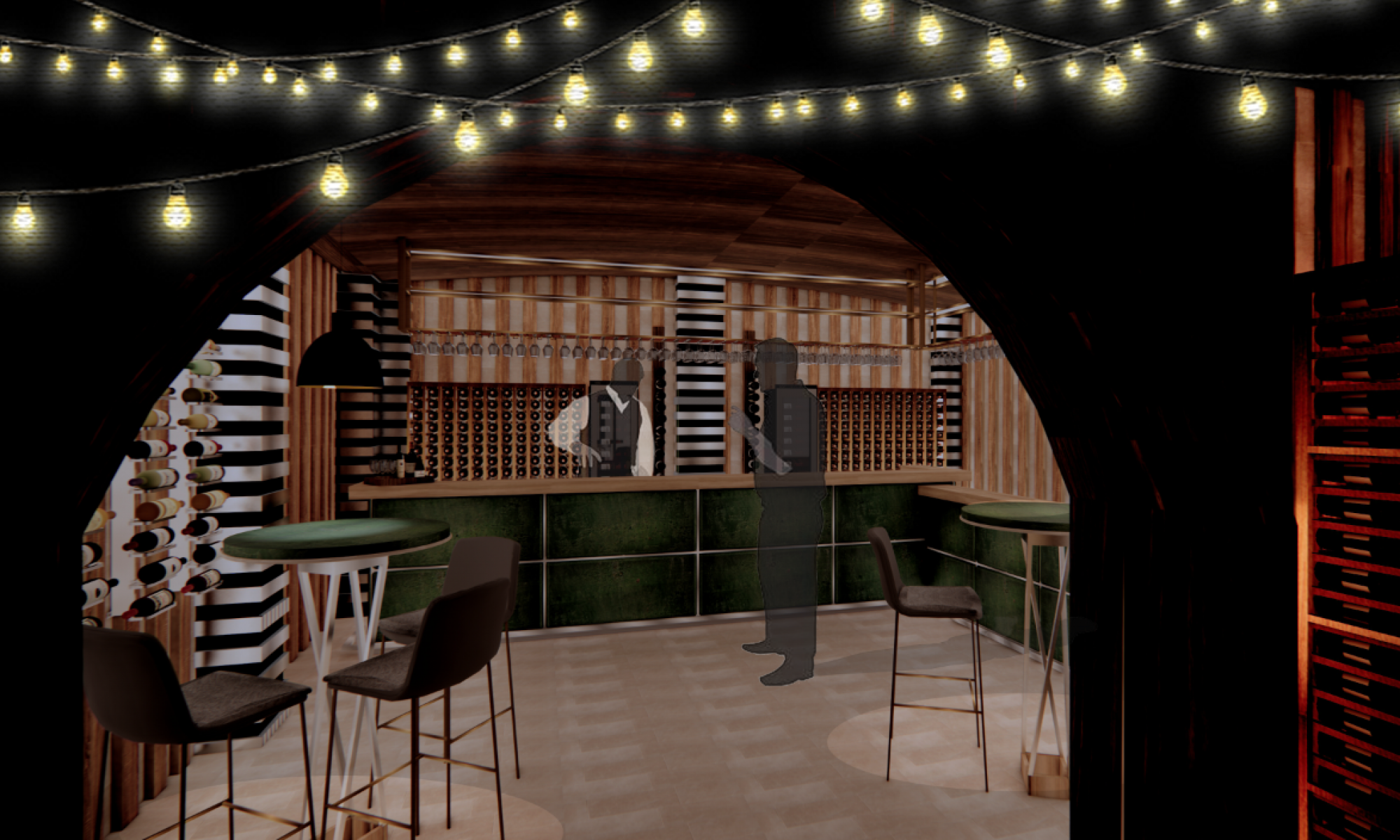
Whilst designing the milliner’s space I researched the themes, colours and soft furnishings that were used within the Alice in wonderland films. One main feature which caught my attention was the repetition of black and white checkered vinyl flooring. Due to its constant presence within the film I wanted to incorporate this idea within the assembly tower, therefore creating a bold, edgy and mysterious look inside the building. Alongside pastel pink and purple walls covered from top to bottom in different hats of all shapes and sizes the assembly tower is hardly recognisable.

Creating Axo’s, Perspectives, sections and plans of the building and its interior has enabled me to gain a better understanding of what the space will eventually look like once I have finished designing. These methods of communication allow me to present my ideas in a clear, efficient and effective way, therefore allowing my client to convey their overall satisfaction or critiques of the interior. I have previously learned how to complete these drawings within my A level Product Design classes, however I have now learned how to produce more technical drawings of spaces. Therefore allowing me to  have more confidence when creating interior spaces in the future.

perspective (crop)       black and white flooring .png

During this project I was able to efficiently come up with a design which suited my clients needs and requirements, therefore enabling them to produce high quality fascinator hats. After researching thoroughly into what a milliner required to thrive in their workspace I believe that I was able to design a variety of essential pieces of furniture effectively. One thing which didn’t go as well was my perspective drawings, some of the  furniture inside were not drawn correctly and therefore caused the drawing to look out of proportion. This is something which I will need to improve and develop on in future projects. Practising my perspective drawings in the studio will enable me to gain more confidence in drawing a 3d perspective of the interior, allowing me to present my ideas more sophistically. This project has given me an insight into what it is like designing and creating a space for a client. It has also enabled me to understand the different steps and processes which need to occur before you start designing the interior of a building. For example understanding the opportunities and restrictions of the host building. These steps are incredibly important in helping me successfully become an interior designer.


POP ART & CONSUMERISM

POP ART


pop art                         POP

Pop art originated in the mid 1950’s and reached its peak in the 1960’s. The clever use of graphic design within this art era captured the attention of a mass audience and therefore encouraged there to be a rapid increase in commodities/sales in the food industry. This implied that the nutritional value of food was less important compared to the way that food was advertised. The popularity of this art culture caused there to be exponential growth in companies of whom where rapidly declining therefore increasing the amount of capital which was entering the economy. An example of this would be how Campbell’s soup rapidly increased sales after Andy Warhol created a graphic image of the soup. The fact that his signature was then placed onto the packaging further increased the popularity of the soup. Therefore showing me the power of pop art over society during the 1950’s-60.

campbells soup

Artists are particularly interested in how art work effects the amount of money made, I believe that during the pop art era, It was significantly proved that due to how popular a particular art form is will also impact the amount of money produced.
Furthermore, I also learned about the taste continuum/pyramid. This pyramid was and still is a way to successfully segregate people into different social classes. Depending on the type of art work you liked lead you to be placed into a category (upper, middle or lower class) and therefore individuals could make a judgement on the type of person you are. This shows me that during the pop art era there was a strong sense of hierarchy and authority within society and that the artwork you chose to like reflected your lifestyle. For example , if someone liked Picasso then people would automatically associate them as an aristocratic member of society and therefore have a wealthy taste in art work.


Who am I?

“Zine Making”


This project involved me collating a variety of different images from the Library, which I liked and that represented my personal interests and inspiration. These images allowed me to understand who I am as a designer as it gave me an idea of the sort of techniques and styles which I could possibly use in future projects. During this project I learned how to create a “Zine”, this is a booklet which can be used to showcase images which are relevant to a specific project, therefore providing the designer with themes, inspiration and colour schemes for design ideas. The zine is very quick and easy to make and thereby can be used as a mood board for projects, in particular I found that creating a zine for my “assembly Tower” project was incredibly efficient and gave me an understanding into how I want the space to be designed.

The zine workshop has inspired me to continue to create zine’s for every project I undertake, this is because it allows me to easily consolidate my ideas and inspiration which can be presented to future clients in a more efficient and effective way. This process has allowed me to understand that as an interior designer it is important to gain as much information from your client as possible. This will therefore allow me to use the zine process to concisely create a collection of images which are relevant to the client’s needs and requirements for that particular space. If I was to complete this project again I would change the way I attached the images to the zine. Rather than sticking the images to the zine I would arrange them in a specific way on the computer and print the A3 sheet out so that the images are correctly placed in order to make the finish of the zine a higher quality.

Click the link below to view my zine created in my second week at university:

ZINE

“Zine making by Natasha Michels”

Zine making

How does it make me feel?

“Design is thinking made visual” – Saul Bass

This project allowed me to learn how to use lighting and shapes to create a photograph that portrays a different mood and therefore enables people to feel a certain way. During this project I was required to create a minimum of 5 places of experience and name each place appropriately depending on how the image made me feel. Capturing a photograph of the space that I created enabled me to view and analyse the place in greater detail to truly understand how it made me feel. I learned that depending on the lighting, colours used and the way objects within the space are arranged allows me to create a variety of different and unique designs which all evoke different emotions. This process has enabled me to understand that every space has a different meaning and therefore allows me to create spaces which appeal to a wide variety of people yet also allow each individual to experience a different emotion which is personal and symbolic to them about how they feel at that current moment.

To improve the work I did in this project I would practice my photography skills, this would enable me to take more advanced photographs of the spaces I created and therefore would allow them to be of a higher quality and standard. The reason for this is because I do not believe that the photos produced reflected my work affectively and therefore I think that some of the photos were not as satisfactory as others. Furthermore, this project has allowed me to understand how as an interior designer you can control the emotions which could be felt within a particular space.


“Blizzard”

BLIZZARD

This particular place made me feel as though the figure was trapped in a snow storm and is struggling to find a way out. The bright light which is concentrated in the centre of the image and the surrounding grey shadows allows you to focus on the male figure wading through the deep snow. This portrayed a sense of helplessness and suffering.


“Prey”

PREY

I titled this image as “Prey” because it made me feel as though the male figure was trapped inside a spiders web with no way of escaping. Due to the curved spirals that are focused throughout the photo it reminded me of the strong structure of a spider’s web and that the spider was waiting for its prey to struggle even more before it will be eaten.


“Spotlight”

SPOTLIGHT.jpg
This photo looks as though the figure is the centre of the stage and everyone is watching him perform. Due to the different gradients of lighting it looks like a large spotlight is pointing down on him causing the crowd to look dark and scary.


“Surge”

SURGE

Within this image the individual seems to be engulfed/surrounded by a surge of waves which tower over the top of him. However, though there is a sense of chaos and panic I also believe that it depicts tranquillity. This is due to the fact that the figure is staring up at the waves in a calm manner could possibly show that there is a “calm before the storm” and that time has frozen for a split second before he is washed away by the upcoming surge of large waves forming around him.


“Bullseye”

BULLSEYE

The circular formations that slowly get smaller within this photo look as though they are targeting the figure at the very end.

Treasured Object

“Treasure the things about you that make you different and unique” Karen Kain

Over the summer I had to produce a treasured object, this had to be something which was memorable and important to me. My treasured object are my hands, I created them from a plaster cast mould which therefore produced identical replicas of them. My hands represent a variety of different things to me including family, sport and of course their importance within my art and design career.

Over the years I have been given a variety of different pieces of jewellery from members of my family, including rings and bracelets. Due to the fact that I wear the jewellery every day means that I have always got a piece of each person who is important in my life with me everywhere I go. Alongside this, my hands are also incredibly important to me as I play a lot of sport including Netball. This means that I am using my hands constantly, therefore playing an important role in my life. Furthermore, one of the most important reasons for my chosen treasured object is their use within designing and making and my passion for interior design. Without them I would find it incredibly hard to express my creative design ideas. This project has helped me learn and understand how to present the most important things in my life through one single object.Though the plaster cast that I produced was good, there are a few things I would change if I completed this particular project again. Due to the fact that I did not properly release the air that was trapped inside the mould it meant that when the cast had dried it had tiny bubble imprints on the hands. This therefore meant that the finish of the plaster cast was not done to the standard I wanted.

PLASTER CAST HANDS

Week One


PAST:
Studying Product design at A-level has helped me to understand how objects effect people and spaces. Designing and creating both a copper floral lamp and an outdoor egg pod chair enabled me to understand how to work with different materials in different environments. Interior design encompasses the theory of object, space and experience. Each interior evokes a wide range of emotions both positive and negative; giving each individual a different perception and view on a space. No one person will experience the same emotion in the same place which is why interiors can be personal and unique to everyone who is in them.


PRESENT:
Creating my zine allowed me to find out what interests and inspires me in the world of design. It enabled me to understand who I am as a designer which will help me to produce creative, unique, personal and symbolic designs. Visiting Cardiff Bay and having a tour around the Senedd allowed me to grasp more of an idea of different types of interior design and architecture. In the heart of the Senedd was a beautiful mushroom shaped structure made from Western Redcedar timber, this produced a natural and calming feeling within the political space, unlike other government buildings.

SENEDD

FUTURE:
In the future I would like to experience projects which challenge me as a designer, therefore allowing myself to widen my knowledge in the design world. I believe that encountering different challenges will help me grow and flourish as a designer. Learning more about different designers will allow me to gain a wide range of ideas which I could incorporate into my own style. I have learnt that interior design is not solely about soft furnishings and elaborate designs, it looks at how spaces effect different people. Creating the zines showed me that each person within the course has a different style, making each designer unique. I am also excited to develop my skills in CAD further which will allow me to express my design ideas in more depth.

WHITE INTERIOR

Design a site like this with WordPress.com
Get started