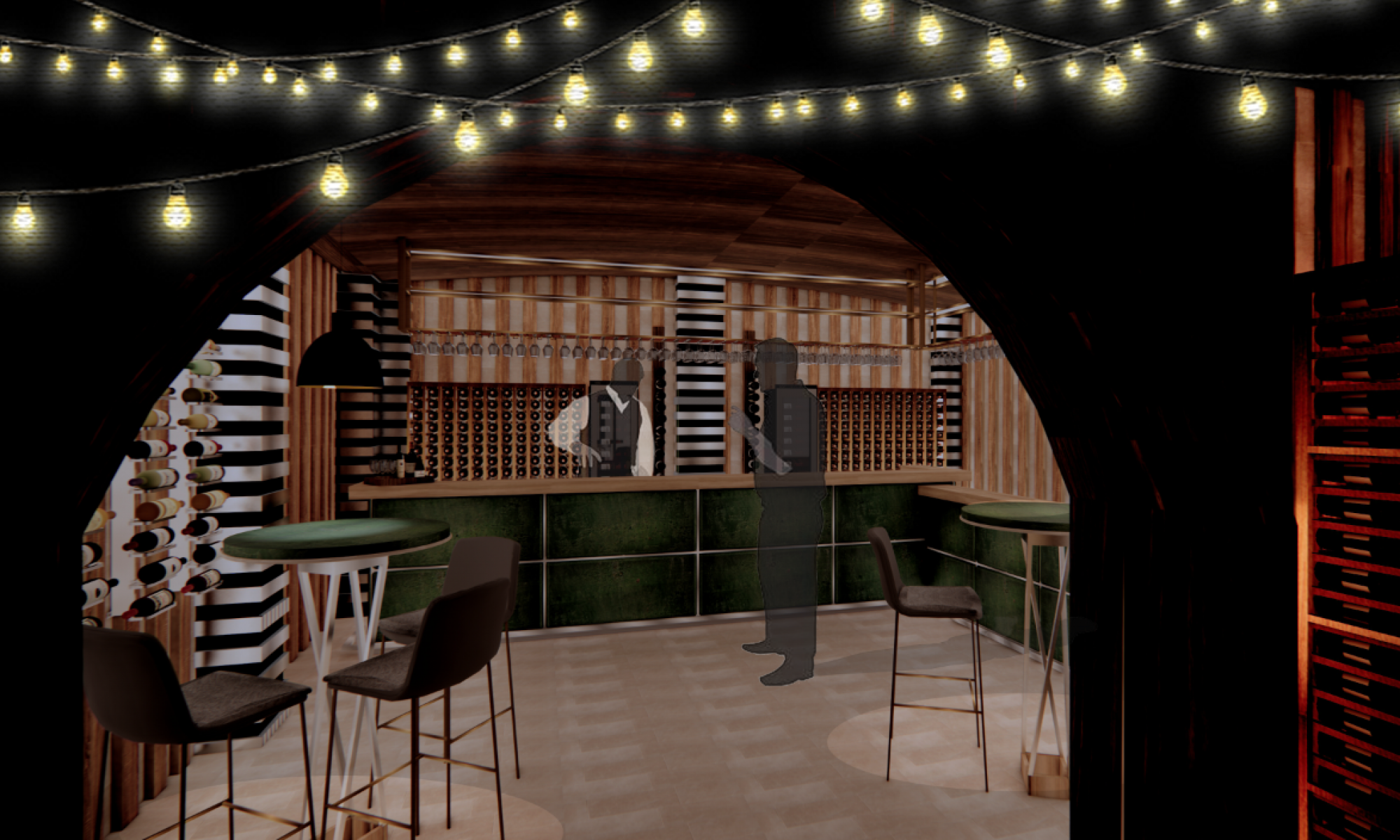
SCHEME REVIEW

The scheme design process for this project involved the development of my plans and sections concerning the host buildings new and updated function. The first thing I did was complete a selection of bubble diagrams and zonal plans, these allowed me to experiment with a variety of different spacial layouts. Throughout my time at uni, I have always found bubble diagrams have helped me when creating a spacial layout for the building. I created a selection of diagrams all of which were different and allowed me to gain a better understanding of how to properly use the space available. One section of the building which I found hard to create was the first floor, this is because the space orbited around a void located in the centre. I found it challenging to allocate sections of the space to a function as each space was incredibly small and narrow. However, this challenged me to adapt the space uniquely.


BUBBLE DIAGRAMS:

bubble diagrams


I enjoyed sketching the spaces how I envisioned them, these small sketches allowed my tutors to obtain a better visual understanding of what I wanted to achieve within the space. Throughout the design process, one main feature of the space are breathing, thinking and talking pods which are located on the mezzanine floor and overlook the ground floor. Initially, the pods were pushed up against the back wall of the mezzanine floor however after some consideration I decided to extrude them over the mezzanine bannister and act as a main feature of the space. My idea was that each pod acted like a Jenga block and is pushed out in different ways; some more extreme than others. I wanted people to feel as though the pods were encompassing the ceiling of the space and they were looking down over them.

One problem which I came across during the scheme design process was the technical drawings for each floor of the building. Every time I needed to redo the layout of the space, I would re-draw the plans and sections (This wasted a lot of time as they had to be perfectly drawn each time). What I have learned from this is that it would be more beneficial to draw one plan and then use tracing paper over the top to design the spacial layout for the space. Therefore, I wouldn’t be wasting time drawing the main plan body repeatedly. I intend to use this idea for my future projects. This process has changed the way I view spaces and shown me that interior design is about trial and error when It comes to designing. If one thing doesn’t work or isn’t successful, then try something new and potentially more outrageous. Pushing the limits in design is scary but I have come to realise that the more experimental you become with your designs the better the result. It has also made me realise that the space constantly changes and last-minute adaptations are part and parcel of the design process.


GROUND FLOOR PLAN:

zone plans #

CONCEPT REVIEW- CITY FIT


This space is designed to teach the ideas of mindfulness, meditation and yoga all of which are holistic methods to help reduce or suppress the compulsions created by mental health illnesses such as OCD, Anxiety or Depression. I portrayed my idea as a ‘BREATHING SPACE’ to my tutors as I wanted to ensure that people understood that this space is somewhere to relax and be absorbed by their surroundings ultimately forgetting what was causing them stress. All my tutors liked my initial ideas and were interested to see how I designed this space to create this so-called ‘breathing space’. One problem I came across during my concept design stages was the accuracy of my plans and sections of the space. I had accidentally got the plans the wrong way around which meant that my initial spacial layouts for the space were wrong. At the time this was incredibly frustrating; as I had to redo the plans and sections. However, this was a blessing in disguise as it prompted me to change the way I had originally designed the space and enabled me to come up with a better and more efficient design for the host building. One thing which inspired me for this project was nature. I have always been interested in how natural materials and the use of biophilic design can impact individuals within the space. Personally, when I’m in a space surrounded by vegetation and natural materials, I feel a sense of wholeness; thus, encouraging my body to relax and admire the beauty of the natural world.


BIOPHILIC DESIGN IDEAS:

biophilic design


This section of the project allowed me to learn more about precedent studies and how they can impact your initial design ideas. I found this particularly helpful as it showed me how other ‘wellness spaces’ have been designed. Luckily one of the studies I researched was in my hometown and therefore, enabled me to view the space in person and fully understand how the space was laid out. One thing I noticed during the concept phases of this project was that most of the wellness spaces around are made up of multifunctional rooms. This means that the space can be changed depending on the activity which needs to take place. I liked this idea as it enables a space to be quickly changed to fit the needs and requirements of the individuals using it.


CONCEPT MOODBOARDS:

BIOPHILIC DESIGN     YOGA MOODBOARD


If I had the opportunity to redo this part of the project, I would ensure that I carefully executed the plans and sections so that I didn’t waste precious design time correcting my mistakes. Overall, I believe that I fully engaged with this section of the project as I was constantly inspired and amazed at the power natural design can have on mental health. I also completed a large amount of research into holistic and biophilic design which has enabled me to be in a strong position in preparation for the scheme review. This also provided me with a clear and strong concept for my designs.


PRECEDENT STUDY:

precedent study

Sketchup Refresher + Tutorials with Mike

Week 2 of the City Fit module was incredibly full on, with tutorials and workshops happening most days to help us develop our initial ideas for our concept reviews. During this week we had our first refresher session using SketchUp with Charlie. This was very informative and enabled me to obtain additional skills which I hadn’t used before; one main skill I learned was how to apply layers into my SketchUp models. I had used layers before, but my products have never been to this scale and therefore it was important that I knew how to use them efficiently to reduce the amount of complications which happen along the way. Alongside this I had a tutorial with Mike Duncan; this was also very informative, and he was very excited at the prospect of my design. As a designer himself he spoke about how he worked with the charitable organisation ‘mind’ and that they are constantly looking for new ways to help support individuals of whom suffer from conditions such as anxiety, depression and OCD (just to name a few). After visiting the MIND wales building in Roath and also researching into spaces specifically designated for mental health, I noticed that the interior of these spaces was incredibly depressing, bland and clinical which is very ironic considering people go to the space to get help for these reasons. These spaces should be easily approachable, not scary and natural to reduce the stigma related to these illnesses.

I had considered developing a healthy kitchen/restaurant and coffee shop within the space to enable individuals to sit, relax and eat and drink healthy food and beverages. This coffee shop will be open to anyone not just the people using the space which not only provide a profit for the organisation but also normalises mental health. Although I would like some of the sessions to be pre- booked e.g. counselling sessions and healthy cooking sessions, I also want there to be a large amount of fluidity within the space; thus, encouraging passers-by to come in chat, or join in on yoga and mindfulness sessions. After speaking with Mike about this he thought it was very good to normalise the space to ensure that it is not just used as a mental health centre but as a place accessible to anyone and everyone.

Through the development of my project so far I have been inclined to create a yoga space on the ground floor which provides taster sessions for all ages and abilities; thus fun, free and enjoyable which means it doesn’t matter if it is loud on the ground floor with everything else going on. The more focused yoga classes will be help upstairs where there is less noise and more privacy. All the rooms within this space will be multifunctional which is most appropriate for functions which will take place within the building. For example, the yoga rooms will be able to be used for the teaching of centering and meditations as they require very little equipment.

IDENTIFYING MY CLIENT AND FUNCTION

Once I had decided what building I was going to use for my module, I started to mind map ideas of the function I wanted the building to carry out. My focus was incorporating the ideas of mental health and wellbeing into the building; a place where individuals can learn how to manage their thoughts and feelings and regain a sense of mindfulness. This is very personal to me as I have suffered with mental illness for most of my life and have found it hard to find a sense of balance in my life where I can manage my thoughts efficiently. Therefore, I believe that it is incredibly important to have a space where people of all ages can come and take part in workshops and classes which will help them understand the importance of mindfulness and enable them to leave with useful skills which they can use in their everyday lives. I intend to create a breathing space which will not only have workshops and classes going on but also an apace where people can come and talk. Talking is the most important way to help an individual who suffers from any mental health condition; however, there are not enough spaces where people can go and vent the thoughts and feelings to others (even strangers).

Mental health is seen as abnormal, and although society is trying to make efforts to change this stereotype it is often subjected to spaces which are highly clinical and quite depressing. I don’t want this space to be advertised as a mental health centre; as I believe people are still uncomfortable coming to terms with the fact, they suffer from conditions branded with the ‘mental health label’. Therefore, The Hayes building will focus on managing these disorders in a fun and non-patronising way in the hope to normalise the conditions even more. One Function which I am addiment needs to be taught within this space is the idea of ‘Centering’. This is a technique of breathing which is shown to help increase your mindfulness and help to calm your body whilst managing the stress of dealing with negative and impulsive thoughts and feelings.

Whilst brainstorming a variety of ideas of functions and activities which can take place in the space, I also investigated who my main client will be. I decided that the charitable organisation Mind would be the perfect client for my space. In addition, I discovered that there is a building located in Roath (Cardiff) which is dedicated to the mind charity and helps support individuals daily; however, the space itself is very plain and boring and not very aesthetically pleasing. The space is located on the outskirts of Cardiff city centre which means that it is less accessible to people unless you catch a bus or walk 34 minutes to its exact location, alongside this there is a greater population within Cardiff city centre compared to Roath which means that tourism is most likely to be more prevalent by The Hayes (miller and carter building.)

Print           mind wales - roath

MIND UK LOGO AND MIND WALES BUILDING (ROATH)

I intend to incorporate biophilic design into my development process as I believe that I should design the building using natural materials which have been proven to have a positive impact on the health and wellbeing of individuals. Breathing is vital for the survival of humans and trees and vegetation ensure that this process can happen; therefore, integrating biophilic design into this space will be perfect in promoting the importance of breathing correctly.

biophilic design

Visiting Host Building Sites


VISITING THE HOST BUILDING SITES:


On the second day of this project, we visited all the host buildings go obtain a better understanding of the building’s characteristics and what surrounds the space. This gave me the opportunity to gain information that will help me with the development of my interior space and enabled me to see the factors which would help or hinder this development process. The first building we viewed was The Hayes (Miller and Carter Steak house); although I had walked past this building multiple times, I had never truly investigated the depth of both its exterior and interior design. As I had decided that this would be the building that I would base my project around I was constantly analysis space and its surroundings to ensure that I absorbed as much information about it as possible. Due to the fact that we visited the building before it had officially opened, we were not allowed inside, however, later on, that day I and a few other students interested in this building asked the manager if we could have a walk around whilst it was quiet.

This was extremely beneficial as it enabled me to see with my own eyes the infrastructure I would be working with and the opportunities and restrictions I could see at first glance. In addition, I was able to take photos of different sections of the building which would help me when completing the host building analysis for this space. One thing which I noticed about the building was that the interior was incredibly dark and there wasn’t much lighting anywhere; however, this worked quite nicely for a restaurant space. This was something which I would need to change when designing my interior space as it functions requires large amounts of natural light rather than industrial artificial lightning.


INTERIOR IMAGES OF THE HAYES:


interior of the hayes

interior of the hayes 2


SURROUNDING BUILDINGS:


surrounding buildings

surrounding buildings 2

surrounding buildings 3

CITY FIT – Brief


CITY FIT:


On the 18th of February, we were introduced to our second level 5 subject module. I was incredibly impressed by how organised this set up as compared to previous projects which made the thought of completing the module very exciting. The module this term was called “City Fit” and involved choosing a host building with a certain function and creating the perfect space/environment for that function to take place. This was our first industrial project and the prospect of designing and developing the perfect space for an existing building with a completely different function was incredibly intriguing. The first day of this project talked us through the brief and what was expected from us; the level of detail required for this module was larger than previous modules, which meant that our final designs must be produced to a significantly higher standard and quality than ever before. Before we could start analysing our building, we were given the option to choose 1 of 4 host buildings which we could use for the project. These Buildings were all located around Cardiff which meant visiting them and analysing their opportunities and restrictions very easy. These buildings included; The Hayes, Miller and Carter steakhouse and the function of this building would be Education/learning. Limerick House, Cardiff centre and the function of this building needed to be related to healthcare- this could either involve healthcare procedures and consultations or a place which helps and supports individuals in copying with bereavement and illness. The HSBC bank on Queens st Cardiff will be used to outline the function of a retail clothing store; therefore, focusing primarily on fashion. Finally, Bute Station in Cardiff Bay will be used to outline leisure; focusing on the arts and creating a centre or gallery.


THE HAYES:  EDUCATION

The hayes miller and carter

LIMERICK HOUSE:  HEALTHCARE

Limerick house

HSBC BANK:  RETAIL

HSBC bank

BUTE STATION: LESUIRE

bute station

Although we didn’t have to decide on which building, we will be using until the end of the week I already had an idea of the 2 buildings which I was interested in potentially pursuing. These included; The Hayes (education)and Limerick House (Health Care). Within my previous projects, I have focused on how the spaces can affect your psychology, in particular, the individual’s mental health and wellbeing. Alongside this, I have also chosen to focus on how your mental health and wellbeing can be impacted by a variety of different interior spaces and therefore believed that this project was the perfect way to research more into how a building can help the effects of mental health and wellbeing.

By the end of the day, I had decided that I wanted to use The Hayes building to successfully design a space which can teach individuals how to manage their mental health and increase their wellbeing and quality of life.

CHOSEN HOST BUILDING:
The Hayes, Miller and Carter steakhouse, Cardiff, CF10 1AH

The hayes

SALES DAY:

SALES DAY: 


On Tuesday 11th February our sales event took place; this was incredibly exciting and nerve- wracking. The night before we had set up our stand ready for the next morning so that we could get straight into business; this made the start of the day easier. Once we arrived we laid out all of the laptop sleeves in an aesthetically pleasing way to make our stand look inviting and attractive. Every member of the team was in at 9:00am which enabled us to set up the stand as well as the card machine before customers started approaching our stall. We decided that it was important to have a card machine available on sales day as not many people often carry cash around now days so it would be more beneficial and enable us to obtain more sales. The only problem that we found with having a card machine in the CSAD building was that the signal failed multiple times which meant that the transactions didn’t go through. Although this was annoying  the customer were incredibly patient and considerate and waited for the transaction to go through.

funny photo

During the day we took it in turns to man the stall. As a collective we thought it was incredibly important to greet customers with a warm and welcoming personality and explain the story behind the production of our unique and contemporary laptop sleeves. During this explanation we offered them the ability to personalise the buttons which are used to securely hold the flap down; the majority of people who bought a laptop sleeve wanted it to be personalised. These buttons were produced on the laser cutter to order and were then sewn on at the stall; this approximately took 20 minutes to complete and therefore the customers were told to come back later on the day to pick their laptop sleeve up. Aidan and Eva were in charge of using the laser cutter as they were both inducted in it; once we had collected 5/6 sleeves which required personalised buttons they went to the soft modelling studio and etched out the names required for the orders.

personalised buttons

LAPTOP SLEEVE PRICES:

PRICE= 13” – £10    15″ – £12

PERSONALISED BUTTON= £1

One thing which I noticed on the day of the sales event was that the customers which bought our laptop sleeves were not just students. At the start of the project we decided that our target market was made up of young extroverted students as we believed that they were most likely to by a laptop sleeves which is made up of bright bold and neon colours. However the sales day showed that a wide variety of individuals who bought our product were of a variety of different ages therefore implying that our laptop sleeves are perfect for everyone.

I have thoroughly enjoyed this project and I am incredibly happy I chose it for this terms module. I have made friends/ connections with people from a variety of different disciplines which will potentially be useful in the future. I have learned so many new skills which I can take back and use for my projects within interior design and into the future as my art and design career progresses.

team photo


team photo

EVALUATION:

Mind Your Own Business has been filled with experience, stress, laughter and creativity. It has been a whirlwind of emotions and has provided me with a voice I didn’t think I had. Working in a creative collective with a variety of like-minded individuals all of whom came from a variety of different disciplines was incredibly interesting and allowed our group to be filled with a vast amount of creative, unique and extraordinary ideas. Although working in a group was exciting and enabled me to make new friends and connections within the CSAD building it also had its flaws. For a group project to be successful everyone needs to be committed, passionate and motivated to achieve an end goal; I found that one person within the group didn’t pull their weight which was incredibly frustrating and annoying.

However, this did not let the rest of the group lose their passion for the project, it increased our motivation to work as hard as we possibly could to obtain the result, we believed we deserved. Being a part of the business Consilio has allowed me to gain additional skills and experience which I can take back and potentially use for my interior design career in the future. I had never used a sewing machine properly or used materials such as bonder webbing to attach different materials together.

This was all new to me and scary at the time as I was worried my lack of experience would let the group down. Harleigh (textiles student) and Daria (Fashion Student) had experience within this field and showed me how to complete the processes required to make the laptop sleeves. My main job was to carefully cut out each material and bond them together using the steam iron and sheets of bonder webbing. Later, in the production process, I was also given the task of sewing the personalised buttons onto the cases. I thoroughly enjoyed learning new skills and was fascinated by the processes required to bond materials together in an easy and efficient way.

In addition, I was given the important job of taking care of the finance for this project; I volunteered to take care of this job as I believe I am incredibly efficient and sensible when it comes to spending money and can easily make excel spreadsheets which can record Consilio’s expenditure and profits. As the project progressed, I become more and more comfortable in the processes required to take place within the development of our business. At times we felt as though the production of our laptop sleeves was not correct as they were not being produced to the quality we required. This meant that there were multiple times within the 5-week project where we had to go back to the drawing board and re-design the sleeve to make it easier to make and to increase its aesthetic appearance. Although this was incredibly frustrating it provided us with several prototypes and allowed us to show the development of our product as the weeks went on; this made selling the finalised laptop sleeve incredibly personal due to the amount of hard work which went into the creation of the product.

buttons 4

WEEK 4 – Production

DEVELOPMENT OF MYOB LAPTOP SLEEVES: 


This week was slightly more positive, we were donated large amounts of leather from the fashion studio. This leather was of a high quality and came in a variety of different colours and textures; thus enabling us to produce a selection of unique and contemporary laptop sleeves. This meant that we were able to spend more money on the lining of the laptop sleeves and potentially make more than we predicted. Over the weekend we discussed how we could put together the materials to create the laptop sleeves in a way which is easier and produces an end result which is more aesthetically pleasing and of a higher quality.


MATERIALS: materials


As a group we collectively decided that we would stitch a pocked onto the felt lining before it is attached to the leather – this will mean that the pocket stitching will not be seen through the back of the product making it look more professional. To make the pocket different we will stitch a tiny bit of leather onto the pocket and attach a swivel clasp so that the customers can safely and securely place there memory stick or student card there. This was something we always wanted to include within our product since the beginning of the project as we all realised that memory sticks can easily be lost and therefore by having them in a designated place they are more likely to be kept safe.


LAPTOP WITH COVER ON   SWIVEL CLASP


Once the pocket had been stitched onto the felt lining ,the faux leather cover could be stitched on using the industrial sewing machines. Before the sleeves were finished the overlocked flap was stitched on again using the industrial machines. My main jobs within the production of our product was to efficiently cut out the sheets of material required to produce each individual laptop sleeve as well as bonding the materials together using the steam iron. As these sections required a large amount of precision I needed to ensure that I cut out each section accurately as the sleeves could look un-professional if they were not cut properly.


cutting materials   sewing materials

overlocking


Whilst myself, Harleigh and Daria were in full production of the laptop sleeves, Aidan and Eva were creating the acrylic buttons with our logo on which will be stitched to the finalised laptop sleeve on sales day. In addition, they also were creating the packaging and stand for the sales event. I Believe that as a group we have worked incredibly well together and when assigned a particular task we did it to the best of our ability.


BUTTONS   BUTTONS 3


Week 3 – DAY 2

LAPTOP SLEEVE DEVELOPMENT – PROBLEMS:


Towards the end of the week, we experimented with using the bonder web to attach the 2 materials together. For the materials to be bonded together with the webbing needed to be activated by heating and being pressed by an iron; thus ensuring that the glue within the webbing melted and allowed the 2 opposing materials to be joined. We realised that this process was the easiest and most efficient way to produce the laptop sleeves in the time frame allocated. As an interior design student, I had little to no experience with processes associated with textiles and therefore, I found it incredibly interesting learning how these are completed. Once I had got the hang of bonding the materials together I decided that this was the perfect role for me within the group.

BONDER WEBBING  HEATING PROCESS: 


bonder webbing


Within this week we produced our first prototype of the laptop sleeve. The outcome was not what we hoped and we were disappointed in the quality of the product, this was because it looked messy, un-aesthetically pleasing and would not be suitable for its purpose. This meant that we had to go back to the drawing board and come up with a design which would be more efficient and increase the likelihood of the product being produced to a higher quality/standard. Alongside the problems with the aesthetic of the product we also realised that the lid/flap for the case was too bulky and looked out of place; therefore downgrading the aesthetic of the sleeve further. As a group we decided that the sleeve would look better with a smaller flap which was thinner; by doing this the sleeve looked less bulky and was far easier to hold and carry. Another problem which we endured was the quality of the leather we ordered from amazon. The pleather was incredibly thin and the white leather, in particular, suffered a large amount of discolouring which decreased the aesthetic of the prototype.

This week was particularly stressful as the production of the sleeves was considerably slow due to the number of problems which we faced. I felt as though we were not going anyway and it seemed the countdown to the sales day and presentation pitch were creeping up incredibly quickly.


prototype   prototype x 2


Design a site like this with WordPress.com
Get started