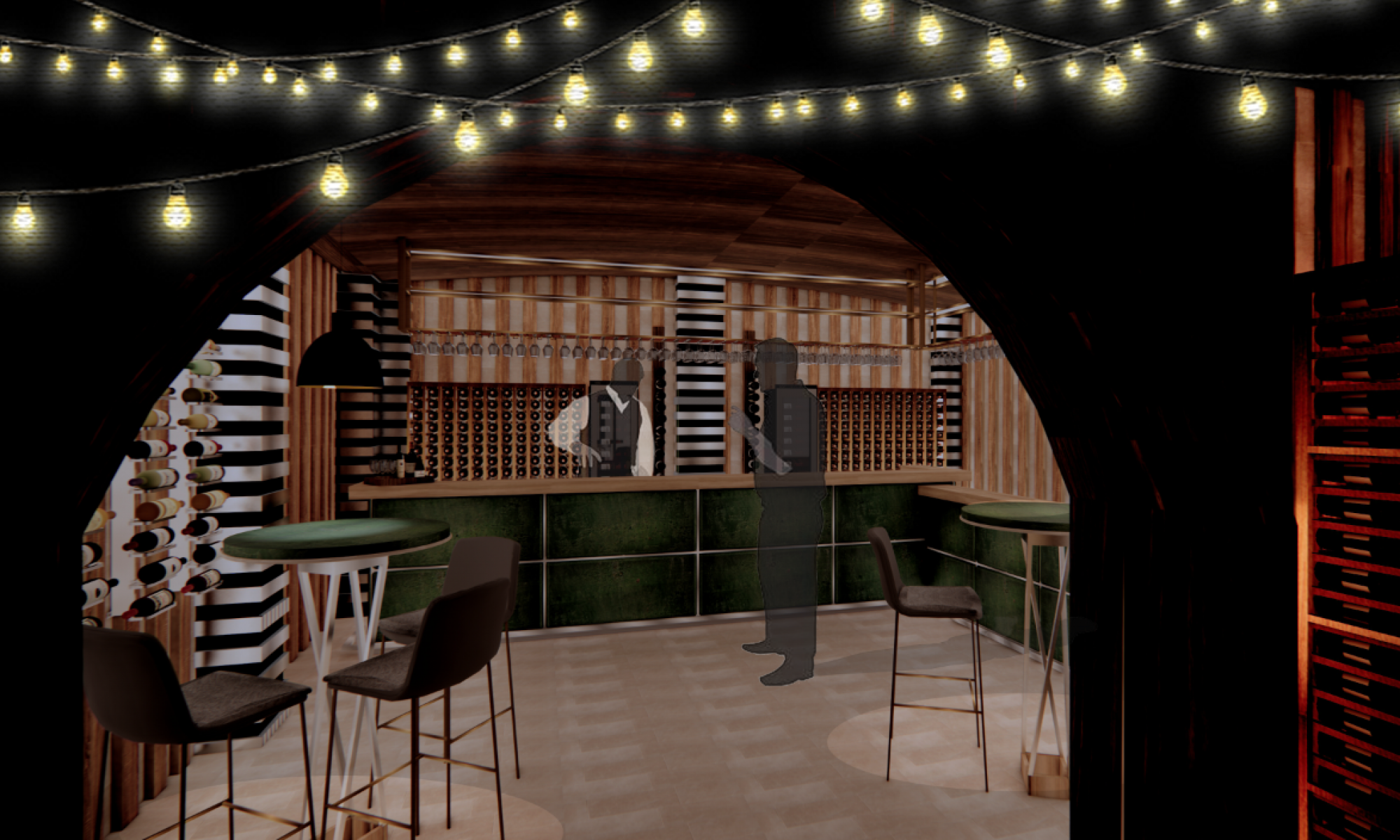
CREATIVE spaces and wellbeing – week 2


CREATIVE SPACES AND WELL-BEING:


During week 2 of field, we had a lecture about Creative Spaces and Well-being by Gareth Louden, I found this incredibly interesting as it related a lot to my course. The focus of this lecture was to understand how the physical environment you are in can affect your level of creativity and your overall wellbeing. There are multiple factors which can impact this, including the amount of light, noise in the area and the number of people of whom are within the environment. The amount of light which enters the space can affect your concentration, for example, bright white lights can help stimulate focus and maintain alertness. However, spaces which are encompassed with dim, ambient lighting can cause drowsiness and therefore, can lower your concentration and focus; thus, your creativity. Personally, I am most creative when I am by myself in a dark room and have no distractions, for example just before I fall asleep, I come up with ideas or designs which could possibly work. I think this works for me as I am incredibly relaxed and therefore my brain is open to a variety of ideas and is not distracted on other things. Therefore, I can focus solely on one thing. I also learned that the furniture you surround and the products which are within the space can also affect your ability to be creative and your wellbeing and comfort. The type of chair which you feel as though you concentrate most can vary from individuals. Personally, for me to concentrate I need to be sat on a comfortable yet supportive chair. As someone who is tall, I struggle with my posture and when sat in chairs I often arch my back, therefore, I am less motivated, and it decreases my motivation to work. It also increases my risks of obtaining stress injuries on my back. If you feel stressed, distracted or uncomfortable within space then your attention is increasingly narrowed and therefore eliminates your ability to obtain peripheral ideas. Within this lecture we were assigned a task, this involved finding a space on campus, sit or stand in the place, observe and listen and then pay attention to your own emotions, thoughts and feelings. During this exercise I went to the heart space which is the centre of the art and design school in Cardiff met. I chose to sit down, listen and observe the people that surrounded me within this environment. What I found when completing this exercise is that I am incredibly focused on what other people are doing which made it incredibly difficult for me to focus on my own thoughts and feelings. This made me realise that my body has been conditioned to listen to others rather than blocking them out which could potentially affect my concentration and creativity within busy environments., therefore suggesting that quieter environments are more preferable to my personality.

SITE SPECIFIC ART AND SITE SITUATION: – Week 2


SITE SPECIFIC ART AND SITE SITUATION:


During a lecture with Prof. Andre Stitt, I learned a lot about site-specific art and site situation and how spaces and objects within spaces can affect the way individuals behave. This lecture allowed me to successfully define a site as ‘A site represents the constituent physical properties: it’s mass, space, light, duration, location and material processes.’ A site can be located anywhere and can embody art installations which can help or hinder the environment. Most artists who produce site installations often want the public to become socially engaged with their artwork, this can help to increase the cohesion within the community. Artists can use public places to create a space which can encourage the development of different emotional responses; the art created and placed within the place can physical art performances or constructions. I found this lecture incredibly interesting as I learned about a variety of different sub topics alongside the idea of site situation, these included; Activism, Territory, psychogeography and architecture. I learned the different ways these characteristics can impact a space or public place. The amount of interaction which takes place within a space varies depending on the type of place people are in. Spaces such as squares are specifically designed to increase the social cohesion within the community and encourage interaction between individuals therefore can be seen as a social environment. On the contrary, underpasses, hallways and airports are designed to act as a walk way where people can get from one place to another quickly, therefore provides little time for individuals to stop and make conversations with others. Therefore, the amount of social interaction within this space is considerably less than squares.


Below is an image of Queen Mother Square in Poundbury, Dorchester, Dorset- It shows a square which is formed to encourage cohesion within the community and enables social interactions between the locals.

queen mother square .jpg


This is The “Boulevard De Nantes” underpass which is located in Cardiff and connects city hall to the city centre. This place acts as a walkway for individuals and does not promote the ability for individuals to experience social cohesion.

underpass


An example of a piece of artwork which was created in a public place includes a mural created by Jane Mutiny as part of the ‘Paint the streets campaign’. This visual includes images of animals which are very near to extinction and animals of whom are already extinct. This artwork was done to ensure that people stopped and looked at the beautiful animals which are slowly becoming increasingly close to extinction and encourages them to do something about this and help prevent the impacts of climate change. This mural was created as part of the Extinction Rebellion Public Art Programme and has shown me that public art can help to enhance a space that was potentially going through placelessness and encourages people to stop and look at the artwork produced. This makes the place mean something to people and therefore, they are more likely to recognise a place for its distinctive public art or installations thus, embedding a personal attachment of that place within that individual’s mind.

1201Mural by Jane Mutiny. Courtesy the artist.jpg

FIELD YEAR 2- TERM 1

This term my field project was incredibly intriguing, it was associated more with my subject compared to last year’s field, which meant that I could relate the topics I was learning back to my Interior Design Course easily. Site Spaces and Public Places is the title of my field project and encourages me to think about how public spaces are used and how individual’s situational behaviour changes depending on the site/space they are surrounded by. The aim of this project is to identify a specific location of my choice, and, design and create a piece of art work which will cause a different psychological, behavioural and emotional response. After some serious consideration as to what I wanted to gain out of this project I decided to use the ‘Boulevard de Nantes’ underpass which connects city hall to the city centre.

underpass
(Image: Rob Browne) https://www.walesonline.co.uk/news/local-news/cardiff-council-underpass-city-hall-17087436

I have chosen this place has since moving to Cardiff I have hated walking underpasses during the evenings as I have felt uncomfortable and vulnerable. As the nights draw in during the autumnal and winter seasons the underpasses are not well lit and rarely having cctv which makes the place seem dodgy, dark and scary. Therefore, my aim is to produce a piece of installation art which will enable this space to become more welcoming and appealing thereby, encouraging more people to walk through the space without feeling vulnerable and in danger.

Some of the main questions which is worth taking into consideration when researching into my chosen environment/space include:
– Photograph and consider the access of the space:
– What is around it?
– Why you chose it?
– Write a short report to clarify
– What you want to achieve?
– Who is the audience and client?
– Site lines and understanding the flow of people, light and context.
– The same space can change depending on the people of whom are within the vicinity of the environment = How many pedestrians walk through the underpass
– Does the volume of people walking through the space change depending on the time of day?
– If so when does the underpass experience the most interaction?

END OF TERM EVALUATION


EVALUATION:


This Project helped me to realize that even when I am under time pressure, I can still produce a high-quality product which functions properly and meets all requirements from the brief specification. Circular economy is all about sustainability and as designers we need to ensure that we are eliminating the amount of waste we are producing and ensuring that we a producing design which use materials that have an extended and continuous life cycle. This project has shown me how important it is to consider all factors of sustainability when designing, especially in a world where climate change and global warming is increasing exponentially. It forced me to consider where the materials came from, how the raw materials are extracted and if the materials can be recycled in order to eliminate disposal in landfill sites.

One thing which really inspired me during my research was the production of Biological pigments. I knew industrially produced dyes and pigments were harmful to the environment, however I didn’t realize the extraction and production of biological dyes was a sustainable process. To obtain the dyes the pigments within flowers and plants such as Chlorophyll are extracted to make a dye which can be recycled and does not infuse the air with toxic fumes. After researching more into this subject, I have learned that these dyes are the best to use and therefore will continue to use them throughout all my future design projects.

pigment pictures

One thing which didn’t go as well as expected is my physical sketch model, although I have managed to recreate the space at a scale of 1:100 I don’t believe that it is the best model I have made during my time at university. Unlike last year I used a thicker cardboard which made it look not as tidy and crisp as models I have created in the past. Alongside this I was using a different glue which was slightly thicker than usual, this could have had an impact on the finish of the design; therefore, making it not to the standard I wanted it to be. Next term I will make sure that I make my model differently and obtain card which is thinner and strong to enhance the quality of the model I produce.

MODEL.png

During the first term into my second year I attended all lectures and believe that I engaged with the project brief; this can be seen through my work. Designing the furniture was very exciting for me. Due to my product design background I wanted to have fun with this project and create a piece of furniture which successfully completed all requirements of the brief but also was incredibly aesthetically pleasing. Due to my excitement towards this project I believe I was fully committed to all tasks I was given and remained focused over the whole duration of the project. Over the past week I have really pushed myself to complete this project to a high standard, and from this I have been able to successfully talk through my concept to a room of students and my tutor in a confident and calm manner. This shows me that I have grown to become an independent and unique thinker, designer and problem solver during this project. I can now use my new lease of confidence with presenting throughout the rest of my design career especially in the last 2 years of my degree. I have worked exceptionally hard and under a large amount of pressure throughout this term and think I have successfully reached my potential for this project.


COMMUNICATION REVIEWS/DESIGN


Communication reviews:


Communication reviews entail presenting your final design to the rest of the course and tutors. This is something which since joining uni I have found incredibly difficult. However, this particular review felt very different, I didn’t feel nervous or anxious about it and used it as a tool to improve my work. I believe that I have developed as a designer over the past year and have become more confident with presenting my ideas to a group of people. This is a very important skill to have, especially as a designer and, therefore, I am incredibly happy with my progress during this project and term.

Marking my visual and verbal communication review was one of my tutors John, he said he was very impressed with my work and although the computer screen did not load all of my work I was not panicked and calmly and collectively carried on with my presentation. A technical fault was not ideal during my presentation however, I believe that this has enabled me to realise that I can remain calm if things do not go to plan and also has shown me that I have grown as a designer and can adapt to difficult situations well.During the reviews, I was inspired by other students on my course and their ideas and way of designing. I found it incredibly interesting to see what other people have designed and how they got to that point within their development. Alongside this, as the module was focused on sustainability it was intriguing to see what different materials and manufacturing techniques people were using to obey by the ideas of the circular economy.

life cycle analysis

During the communication design section of the module I polished up my final design and started to Render my SketchUp using the programme Vray. We started learning about Vray at the start of last year and I now feel very confident and comfortable using the software to make my designs look realistic. One thing I like about Vray is that you can change the intensity, colour and direction of light within the space. This is incredibly important within my design for this project as my main aim for the space was to ensure that the environment is lit with different coloured lights. I believe that I have been able to successfully render the space to make it feel like it is encompassed with a variety of different lights. I am very happy with my final renders, however, if I was to do this project again I would increase the detailing within my renders and also make sure that they were rendering at a very high-quality resolution. Unfortunately, my renders have not come out with the best resolution and therefore, this is something which I will need to work on for my next project to ensure that the renders are produced to an extremely high quality.

The image below is an example of my renders which I created for this project:

vray render- 6
For my project to marked I needed to transport all my drawings, SketchUp renders and research onto a photoshop document. I had never used photoshop before coming to university, therefore it was a skill which I needed to learn quickly. I am incredibly happy with my progress within photoshop and am impressed with the editing I can do on their to enhance my final design proposals.

SCHEME DESIGN


SCHEME DESIGN:


After a few weeks on this particular project we engaged in a scheme design review, this was particularly helpful for me and expanded my ideas for the overall space of the heart space. Speaking to both Dennis and John (course tutors) I was able to gain feedback which positively criticised my design and ideas, this enabled me to widen my creativity and experiment with space even more than what I was doing. Originally I had produced a very creative and bold piece of furniture however, the space was very basic and minimal. John, Dennis and Craig all told me that I should be more experimental and bold with my space like I was with my furniture. Although at the start I was let down by their comments I am now incredibly thankful for their constructive criticism. This criticism has helped me to develop as an interior designer and has shown that I should always be bold with my ideas and not always go for something simple and minimalistic.

I have always been interested in Olafur Eliasson’s work and speaking to Dennis about this he suggested I looked into using the height of the space in my design. Height is incredibly important in interior design, especially when producing large installations. Using my sketchbook I roughly drew a variety of different ideas, one of my favourites included the use of large geometric installations which extended up into the space. These will be situated in a position which will partition off GeoPods, therefore groups can work collaboratively in a private yet social environment. Alongside this, I looked into how these installations would affect the light which enters the space. I decided that if I used different coloured geometric installations the light will penetrate through them and then reflect different coloured light into the heart space. This adds to the mood and atmosphere I wanted to create which I was incredibly happy about.


After researching into a variety of Elliassons work I decided to experiment in my sketch up model and add different coloured ( slightly transparent) installations, all of different heights and sizes. Throughout this development process, I found that I became very critical with my work and most of the time not liking what I had designed. After a series of attempts designing different shaped installations; I decided to stick with the theme of geometric/rectangular shapes. This would, therefore, match the structure of the GeoPod.

olafur elliason

thMCE9NXUA

During this period of development, I looked into how the GeoPod would be accessible for wheelchair users. This is incredibly important as I wanted my furniture to be easily accessible for a variety of different users. The GeoPod’s main function is to have the ability to be easily taken apart and put back together due to its interlocking, non-permanent mortise and tennon joints. Using SketchUp and my sketches I experimented with putting a wheelchair into the pod. For this to function properly parts of the GeoPod will have to be taken apart. The main seat and leg space of the pod will have to be removed to leave the shell of the pod exposed. With these sections removed a wheelchair can easily be manoeuvred into the correct position. This showed me that my design is inclusive for all.

Below are images of the single GeoPod being used by a wheelchair user.


Wheel chair user                                       Wheelchair user 2


I believe that during this scheme design development I have thoroughly engaged, attended and committed to the project; because of this, I have produced a piece of work which I am incredibly proud of so far.

CONCEPT DESIGN:


CONCEPT DESIGN


My main inspiration came from childhood, from a young age I would use Stickle bricks, Lego and Jigsaw puzzles to create objects and buildings. These products helped me to maintain focus and concentration within study periods and they also helped me to learn about construction. I wanted to use the idea of Stickle Bricks to create a piece of furniture which was fun, creative and could easily be put together and taken apart again using mortise and Tennon joints. I started to design a piece of furniture which was created from geometric shapes, after experimenting with a variety of different drawings I came up with a design which encompassed everything I wanted to gain from this project. After a large amount of research and experimenting, I came up with the design name as GeoPod. GeoPod is a piece of furniture which can be adapted for individuals and up to 6 people. Each component in the GeoPod can easily be taken apart and put back together due to its mortise and tennon joints. Alongside this, the pods are suitable for wheelchair users as the seat can be removed so a wheelchair can be easily manoeuvred into the shell of the pod. GeoPod was constructed for a variety of different users, ranging from students to passersby in airports or any space which requires contemporary interactive seating.

stickle bricks
The space which I have decided to use is the heart space, this is because I believe that as the HEART/centre of the CSAD building I wanted to make it as fun, bold, bright and creative as possible to link in with the aim and ethics of the courses based in the building. With this in mind I wanted to ensure that within the space I made a bold statement with both my furniture piece and instillations. The heart space needs to be a multifunctional space where people can eat, work, read and chat. To ensure that this is maintained my furniture needs to be adaptable, as the GeoPod can easily be taken apart and put back together the space can easily be changed depending on the function which is required at that particular time. For example, during the academic week lectures may take place in the heart space, therefore the space will need to be adapted to utilise the space formally. Each component of the GeoPod can collapse and become flat packed therefore, the big installations and larger GeoPods can be moved into a different space to make room for the lecture. This links with the whole concept of this design and the brief which was set. The brief stated that we had to produce a piece of furniture which was sustainable and linked with the ideas of a circular economy. In today’s society plastic is the main feature of most products which are used in day to day activities. However, the type of plastic used can be incredibly harmful to the environment and therefore cannot be reused and recycled. My aim for this project is to use HDPE (High-density Polyethelene) this is a material made out recycled plastic such as recycled milk, shampoo and water bottles. Due to HDPE having weak cross bonds the material can be reheated and remoulded as many times as required. This, therefore, extends the life cycle the product endures, meaning that the product can easily be made into different products after its original use.

inital furniture design ideas

Moon Exhibition- Natural History Museum

On Tuesday the 22nd of October I had the opportunity to go on a London trip with the university, we were able to visit the Design Museum, National History Museum and the Victoria and Albert Museum. One of my favourite and most inspiring exhibitions was in the Natural History Museum, the museum of the moon is a touring artwork by Uk artist Luke Jerram. As soon as I entered the room, I felt a large sense of tranquillity and peacefulness, the large moon encompassed a vast proportion of the space which made me feel as though I was floating in space. Due to its size and intricate detailing, the moon looked incredibly life-like thus enabling individuals to feel as though they were circulating the moon in space. The Space was cold, dark and the only light which illuminated sections of the space was the reflection from the moon, this space was carefully designed to ensure that each person which entered the space experienced a different emotional feeling. Once I was in the space, I noticed that a large amount of the people of whom had come to see the exhibition were lying on the floor looking up at the moon. This reminded me of Olafur Eliasson’s ‘Weather Project’ exhibition where he recreated the sun; the space was created for individuals to admire the beauty of the sun. The entire space flooded with a warm red/orange mist which reflected off the large ball of light which was suspended from the ceiling. Although both design projects are similar their characteristics are completely opposing. The moon project depicts a cool, blue and misty space whereas the ‘Weather Project’ produces a warm, bright, orange interior space.

Moon.png

Natural history museam .gifNatural history museam

SPACE

This year I want to be more adventurous with my designs and ensure that all the spaces I produce enable individuals to feel something completely different. This term our main focus was to produce a piece of sustainable furniture which would encompass a particular space within the Cardiff metropolitan buildings. I chose the heart space for my design, although this space functions very well I saw a large amount of opportunity with it particularly due to the incredibly high ceilings.  My focal point for my design is geometric bright bold shapes, not only in the furniture but with the space as a whole. Using the height of the space I want to create large geometric instillations which help to increase privacy between the furniture but also provide a contemporary, exciting and adventurous atmosphere within the art building.

According to the internet the definition of the term ART is = the expression of application of human creative skill and imagination, typically in visual form.

As a design student I love being creative and therefore I want to inspire people within the building to be as bold and out there with their designs. This space will therefore be a reminder to all students that anything is possible and to be as creative with their designs as possible. Alongside this is was also inspired by Olafur Elliason.

Olafur Elliason is a Danish-Icelandic artist who is known for his sculptures and large scale instillations . One of his main designs which inspired me was his Kaleidoscope artwork. These are instillations which create a variety of reflecting colours which encompass the space. This is something I would like to experiment with in the heart space, I believe that it is the perfect place due to its large sunlight roof which floods the interior with a vast amount of light. I could use the large geometric instillations to reflect the sunlight and produce a variety of different coloured shadows within the space. This is something which I am currently working on and developing as I move my way through the project.

IMG_MDA101623_1600pxolafur elliason .jpg

thMCE9NXUA


Product Materials

HDPE – High Density Polyethylene

This material is made from recycled plastic such as milk, shampoo and water bottles, due to it being a thermoplastic HDPE has weak intermolecular bonds thus enabling the material to be heated and moulded as many times as required. HDPE is incredibly lightweight yet very strong which means that the products can be easily moved without little effort. Alongside this the material is chemical resistant, this implies that the material can easily be cleaned to remove any bacteria. This is particularly important for furniture in the heart space as food and drink will often be consumed during different hours of the day. In addition, the material is impact resistant which means that the material can withstand large amounts of force without breaking and therefore is incredibly tough.

I have decided to use this material for my product because I believe that in order to be more sustainable we need to use all the reusable plastic available on the planet to create new and exciting products. This will then eliminate the amount of plastic which is sent to landfill sites. Creating a new and exciting product out of basic every day house hold essentials excites me as I believe in the future we need to ensure that the majority of our products can have a sustainable life and embody a new function once their life has ended.

hdpe bottles

BILOGICAL PIGMENTS:

Once I had discovered which material I was going to use for my product I then looked into sustainable pigments. This is because industrially produced pigments are bad for the environment as well as incredibly toxic for the ecosystem which makes it hard for them to be broken down when the material is recycled. Therefore, I researched into the use of biological pigments, these are produced by living organisms and the colours found in the plants and flowers can be extracted and used as dyes. For example:

Chlorophyll absorbs yellow and blue wave lengths which reflect green- these can most commonly be found in leaves and plants.

Carotenoids produce red, orange and yellow pigments which can come from the extraction of flowers.

pigment pictures

Design a site like this with WordPress.com
Get started